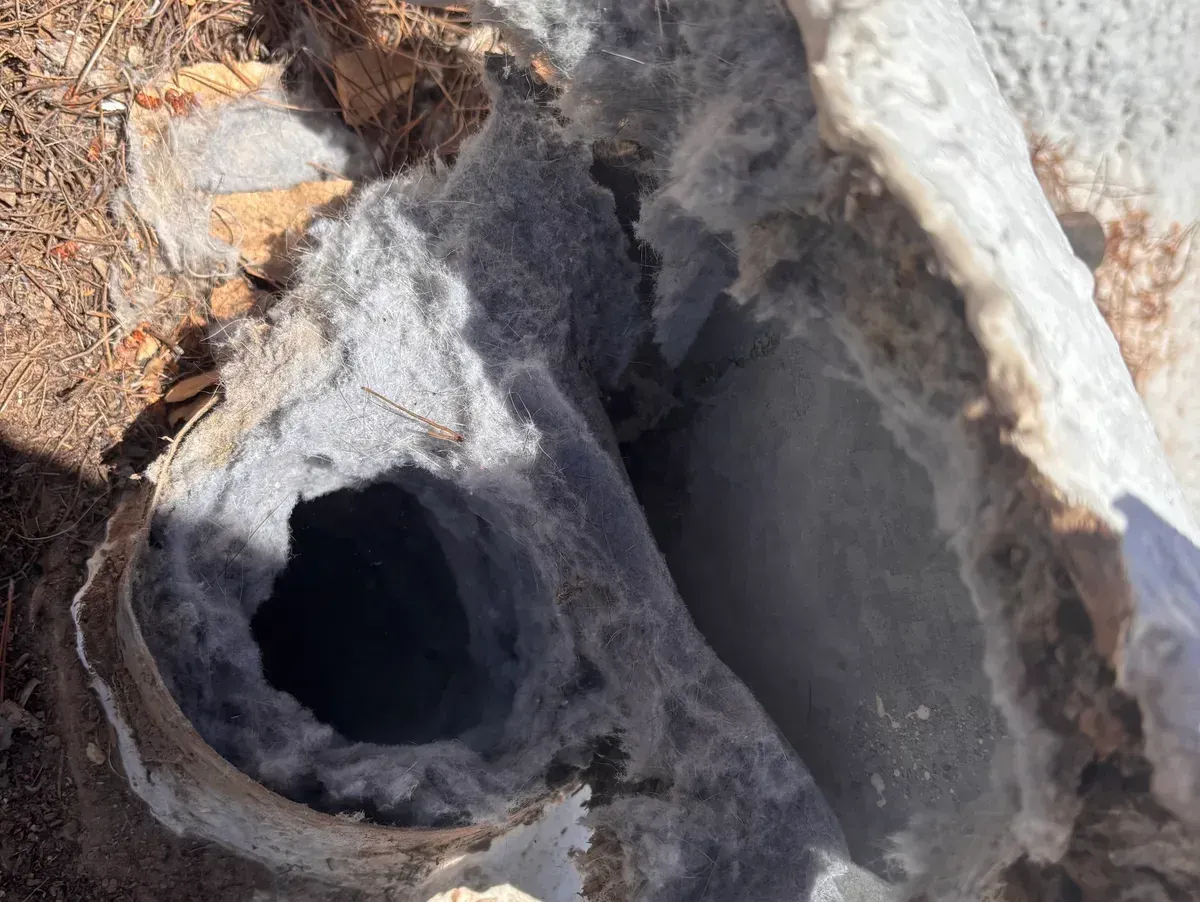
Bird nest in a dryer vent
For a bird looking for somewhere to build, an uncovered vent cap in this part of the Valley is close to perfect. It shuts the duct completely, and it turns into a fire risk as soon as the dryer starts.
Calls answered 7am to 8pm · same-day service usually available
Tell us what you are hearing and where in the house. We will tell you what we think before anyone climbs anything.
How to know that is what you have
- Chirping, scratching or rustling in the wall or ceiling near the laundry
- The dryer went from fine to useless overnight rather than slowly
- Twigs, dry grass or feathers on the ground below the vent
- The same birds landing on the same spot, repeatedly
- A strong smell when the dryer is running
- The dryer shutting itself off partway through
- It is somewhere between February and May
The suddenness is the giveaway. Lint takes years. A nest arrives over a weekend.
Why Mesa gets this more than most
There is a specific reason, and it comes back to the age of the housing.
Birds are kept out by the flapper on your cap. It lifts when the dryer pushes air through and drops shut when the machine stops. Simple, effective, and it does not last forever.
Mesa has the oldest exterior flappers in the East Valley. Plenty of them have been sitting in direct Arizona sun since the seventies. They warp. The hinge seizes. They stop closing entirely, and nobody notices because the dryer still works and the flap is eight feet up.
Once that flap is stuck open you have a doorway into a sheltered, elevated, warm cavity. In a city where the native vegetation was scraped off decades ago, that is prime real estate. The neighborhoods with mature landscaping get it worst, which here means Dobson Ranch with its greenbelts and the older parts of Evergreen.
Why this is more than an annoyance
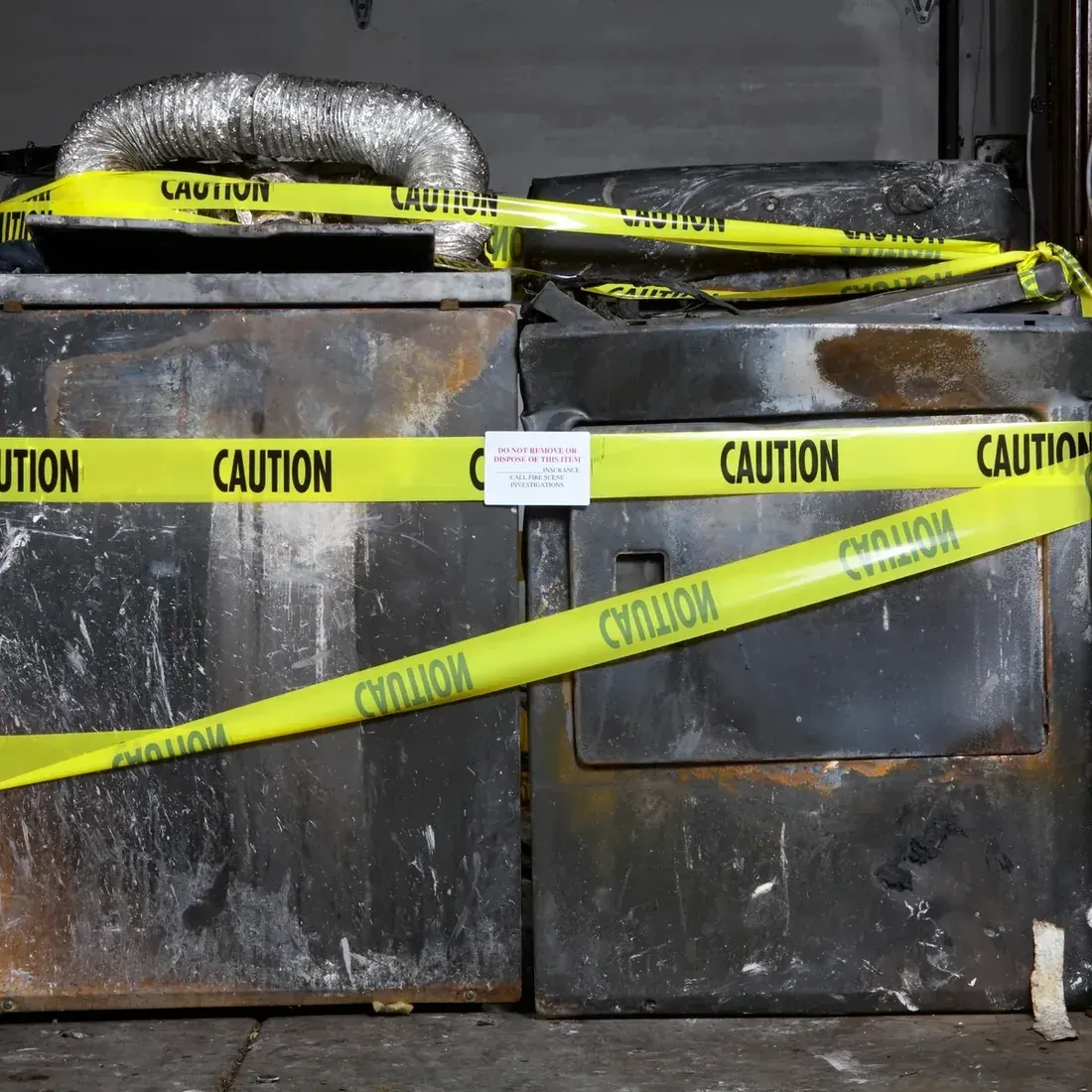
The fire risk
Those figures come from the National Fire Protection Association rather than from us. Their data puts failure to clean at the top of the list of contributing factors in dryer fires, with lint the material most likely to catch first. A nest is the same hazard, compressed into one spot and built out of tinder.
Source: National Fire Protection Association, Home Fires Involving Clothes Dryers and Washing Machines.
The moisture
Every load has to send humid air somewhere. Blocked completely, it backs into the wall cavity, which becomes drywall damage and mold.
The appliance
A fully blocked vent trips the thermal fuse repeatedly. Some machines shut down mid-cycle, which at least tells you something is wrong. Others quietly cook themselves for months.
The birds
Bluntly: run the dryer with a nest in the duct and nothing in that nest survives the experience. Most people find that reason enough on its own to stop running loads and hoping the problem resolves itself.
Why not to climb up there
The roof
A two-story tile roof in this state is a genuine hazard. The tile fractures where you put weight wrong, and that fracture shows up later as water coming in.
The law
Season and species determine whether an occupied nest falls under the Migratory Bird Treaty Act, federal legislation covering most native North American birds, under which interfering with an active nest containing eggs or chicks is an offense.
You will be told which of those you are actually dealing with, rather than us assuming or simply pulling it out. A nest that has been abandoned is a different conversation to one holding eggs.
Why a guard and not a screen
Hardware cloth is the instinctive fix because it costs almost nothing and visibly stops birds. It also intercepts every fiber the dryer produces, so within a few months the vent is blocked by your own lint rather than by wildlife.
There is code language on this. The exterior termination has to open freely under airflow, and screening it is specifically not permitted, for the obvious reason that a screen loads with lint within a season. A purpose-made guard lets lint through and keeps birds out. If someone screened your cap before you owned the place, we will spot it.
We do it properly, not quickly
You can do this job quickly. Pull the nest out, seat the cap, drive away, ten minutes gone. It fixes nothing, because the compacted lint the nest had been holding in place is still sitting in the run, and the defective cap that admitted the bird will admit the next one.
How we handle it: establish what is up there and whether anything is living in it, take the nest out, run the brush through the entire length, then fit a correct guard and inspect the hood and flapper while we are in position. It takes longer and it is the only sequence that stops you repeating this next February.
Keeping them out
- A bird guard on the cap, which is the actual fix
- A flapper that closes properly when the dryer is off
- An intact hood, so there is no open ledge to build on
- Checking the cap in January or early February, before the season starts
- Cleaning the vent on a schedule, so somebody is looking at that cap regularly
Questions
How do I know there is a bird nest in my dryer vent?
Speed is what tells you. Lint chokes a run over the course of years, whereas a nest turns up inside a weekend, so the machine stops working almost between one load and the next. There is usually noise with it, scratching or chirping behind the laundry wall, and sometimes grass or feathers scattered on the ground beneath the outlet.
Is it actually dangerous?
It is. You have dry nesting material pressed up against a duct carrying heated air, with months of accumulated lint stacked behind it. The obstruction also drives all the moisture from every load straight back into the wall cavity rather than out of the building.
Can I remove it myself?
Please do not. Walking a two-story tile roof here is genuinely hazardous, the tile fractures where you step wrong and that fracture becomes a leak. On top of that, an active nest may carry federal protection under the Migratory Bird Treaty Act depending on the species and the month, and that statute covers most native birds.
What stops them coming back?
What works is a purpose-built cap with a guard on it, sized so lint passes through freely while a bird cannot. What does not work is screen mesh. And this is not merely our preference: the residential code requires that exterior termination to open freely under airflow and rules screens out, precisely because they pack with lint and become a hazard.
When is nesting season here?
Roughly February through May for most of the species that go after vents, though it varies. If you are going to check your cap, late January is the time.
Does this happen on side-wall vents too?
Yes, less often but it happens, and Mesa sees more of it than most places for one specific reason: the city has the oldest exterior flappers in the East Valley. A flapper that has been seized open since the nineties is just as inviting at ground level as it is on a roof.
Calls answered 7am to 8pm · same-day service usually available
Nest removal plus the full duct cleaning. Call and describe what you are hearing.